

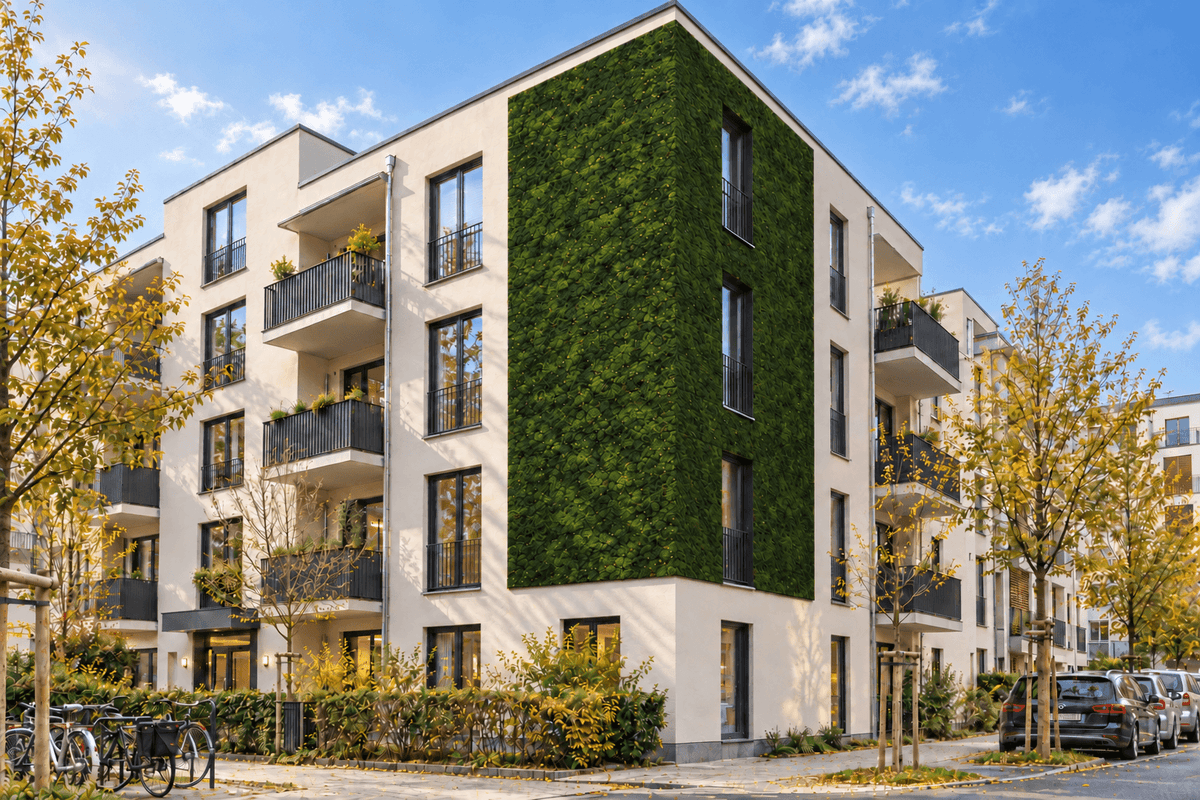
Facade greening in cities - natural. maintenance-free.
Our cities are becoming increasingly densely built-up, and available space is becoming scarcer. Greened facades can improve the microclimate, reduce noise, and enhance the cityscape. However, traditional greening systems often involve high maintenance requirements and costs. Here you will find a transparent overview of the possibilities and differences.
four benefits for the urban environment
-
More pleasant climate
The moss facade stores moisture and releases it back into the environment through evaporation. This creates a natural cooling effect that can contribute to reducing the thermal load on the building.
-
better air quality
The structured moss surface can bind dust and other particles from the ambient air. When it rains, these are washed off the surface again.
-
More natural cityscape
Moss facades create visible green accents, soften densely built urban landscapes, and give buildings a natural, high-quality appearance.
-
Less noise
The open-pored structure of the moss has a sound-absorbing effect. This helps reduce sound reflection on facades – which is particularly interesting for buildings in high-traffic locations.
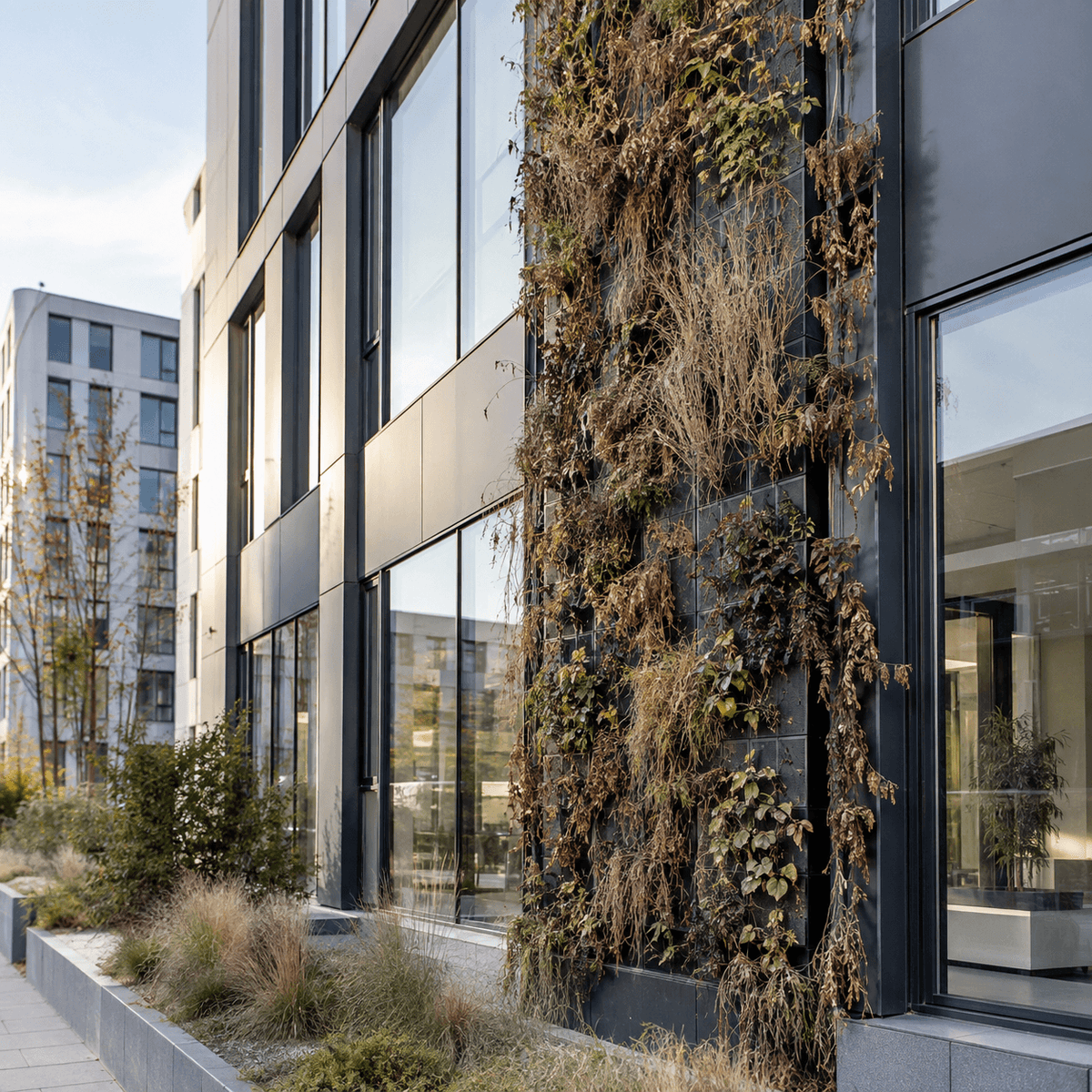
Challenges of traditional green facades
Dependence on Location
Not every plant is suitable for every location - sunlight, temperatures, wind, and rainfall influence which plant species are suitable for a facade.
Demanding Technology
Living greening systems require professionally planned fastening, irrigation, and drainage. It must be ensured that neither the facade nor the building structure is compromised – especially in the case of older or listed buildings.
Ongoing Maintenance Effort
Watering, fertilizing, pruning, cleaning, and replacing dead plants result in permanent effort and costs. These ongoing tasks must be taken into account during the planning phase and secured for the long term.
Why Greenovation is rethinking facade greening
-
Completely maintenance-free
The preserved moss requires neither water nor fertilizer or pruning. Once installed, no regular horticultural maintenance is required.
-
Weatherproof
The system is designed for changing temperatures, precipitation, and challenging weather conditions. This makes it suitable even for shaded or hard-to-reach facade areas.
-
Space-saving system
Since no planters, substrate, or root space are required, Greenovation can also be used on smaller facade areas and for targeted architectural accents.
-
Particle binding and sound absorption
The structured moss surface can bind particles from the ambient air, which are then washed away by precipitation. At the same time, the open-pore structure has a sound-absorbing effect and can reduce sound reflections on the facade.
-
Component of the building envelope
As a curtain-walled, rear-ventilated facade system, Greenovation complements the existing building envelope and combines design with function. We coordinate the resulting building physics advantages for each specific building on a project-by-project basis with the specialist planners involved.
The Greenovation system bypasses the central challenges of living green wall systems: the preserved moss requires neither substrate nor irrigation or regular maintenance – and combines a natural look with functional benefits.
Where could your city become greener?
Whether for an office building, residential property, or noise barrier: in a brief initial consultation, we will discuss the suitable area, the technical implementation, and the potential investment scope for your project.